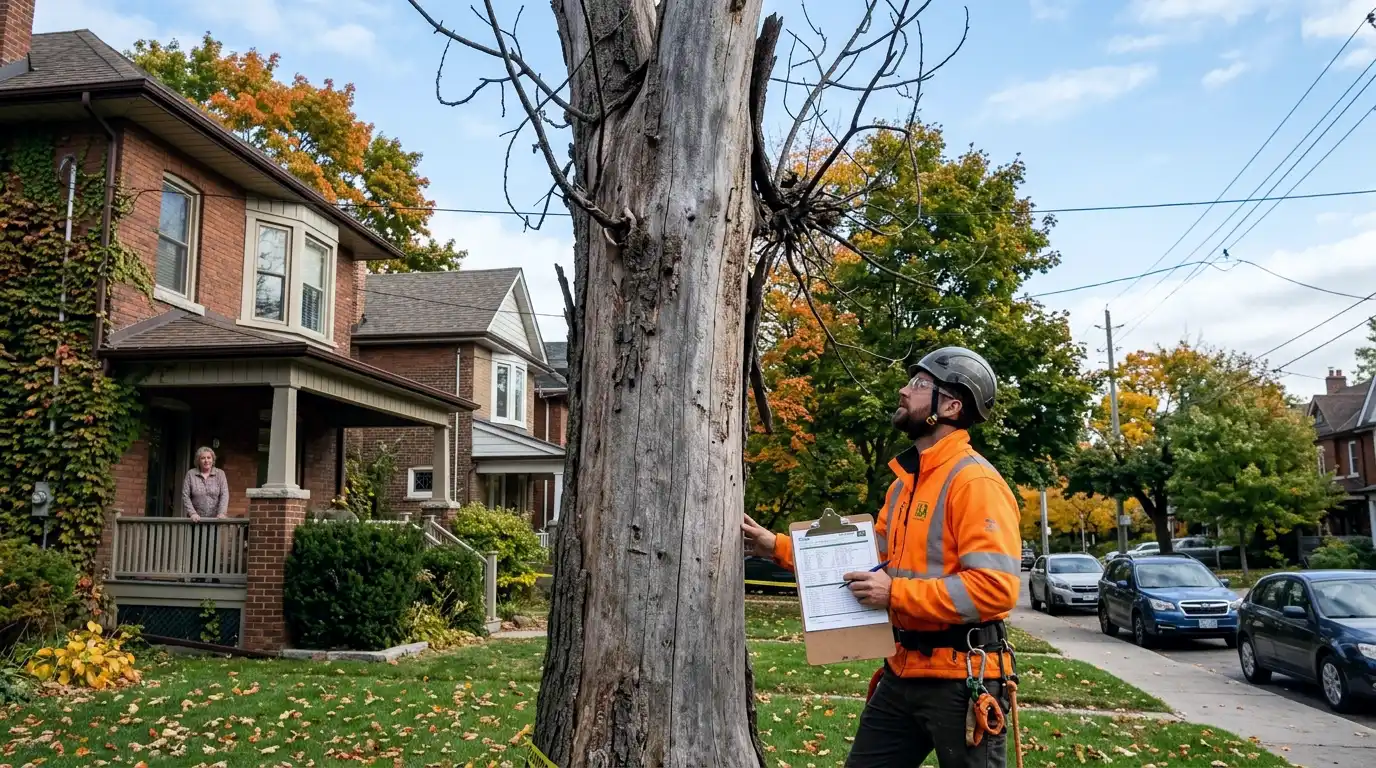
This guide explains the dead tree removal permit in Toronto, including the approval rules, property conditions and practical steps that can affect the work. Toronto says a permit is not required to remove a tree that is 100 per cent dead, but the City provides a permit-exception confirmation process and advises owners to receive confirmation before removing or injuring a bylaw-protected tree unless it is an emergency. A declining, partly dead, storm-damaged or disputed tree is not automatically treated as 100 per cent dead.
What Toronto Says About Dead Trees
The City’s current guidance lists a 100 per cent dead tree under its permit-exception process. The removal permit itself is not required for a fully dead tree, but owners should request and receive the City’s exception confirmation before work unless an emergency requires immediate action.
Toronto generally requires a permit to injure or remove a bylaw-protected tree, ravine, or natural feature. Private trees with at least one stem measuring 30 cm or more are protected, City-owned street trees are protected regardless of size, and ravine or natural feature areas can involve additional restrictions.
Before removing a dead tree, property owners should check the current City page on when to apply for a tree or ravine permit. If the tree is not obviously 100 per cent dead, speak with the City of Toronto, 311, or a qualified arborist.
Dead-tree rule: a fully dead tree can qualify for a permit exception, but the City provides a confirmation process. If there is doubt about condition, ownership, ravine status or whether another protected tree could be injured, confirm the requirements before work begins.
Why Documentation Still Matters
Even when a permit is not required for a 100 per cent dead tree, documentation can still protect the property owner from confusion later. A neighbour, contractor, buyer, insurer, or City investigator may ask why the tree was removed. Clear photos, measurements, and a qualified arborist’s notes can help show what condition the tree was in before work began.
Documentation can be especially useful when the tree is large, close to a property line, visible from the street, near a City-owned tree, near utilities, or close to a ravine or natural feature area.
What Is Exempt and What Still Needs Checking
The dead-tree exception is helpful, but it should not be stretched beyond what the City actually says. These are the main situations property owners should separate carefully:
- 100 per cent dead private tree: Toronto says a permit is not required to remove a tree that is 100 per cent dead.
- Declining or partly dead tree: If the tree still has live tissue, the dead-tree exception may not apply.
- City-owned street tree: A tree on the City road allowance or boulevard should be treated differently from a private backyard tree.
- Ravine or natural feature area: Ravine rules can apply to trees and vegetation in ways that are separate from the private-tree rule.
- Boundary or neighbour tree: Ownership and consent questions may need to be clarified before work begins.
- Nearby protected trees: Removal work, equipment, stump grinding, or access routes should not injure another protected tree.
If any of these issues are present, confirm requirements directly with the City of Toronto, 311, or a qualified arborist before approving work.
How a Dead Tree May Be Documented
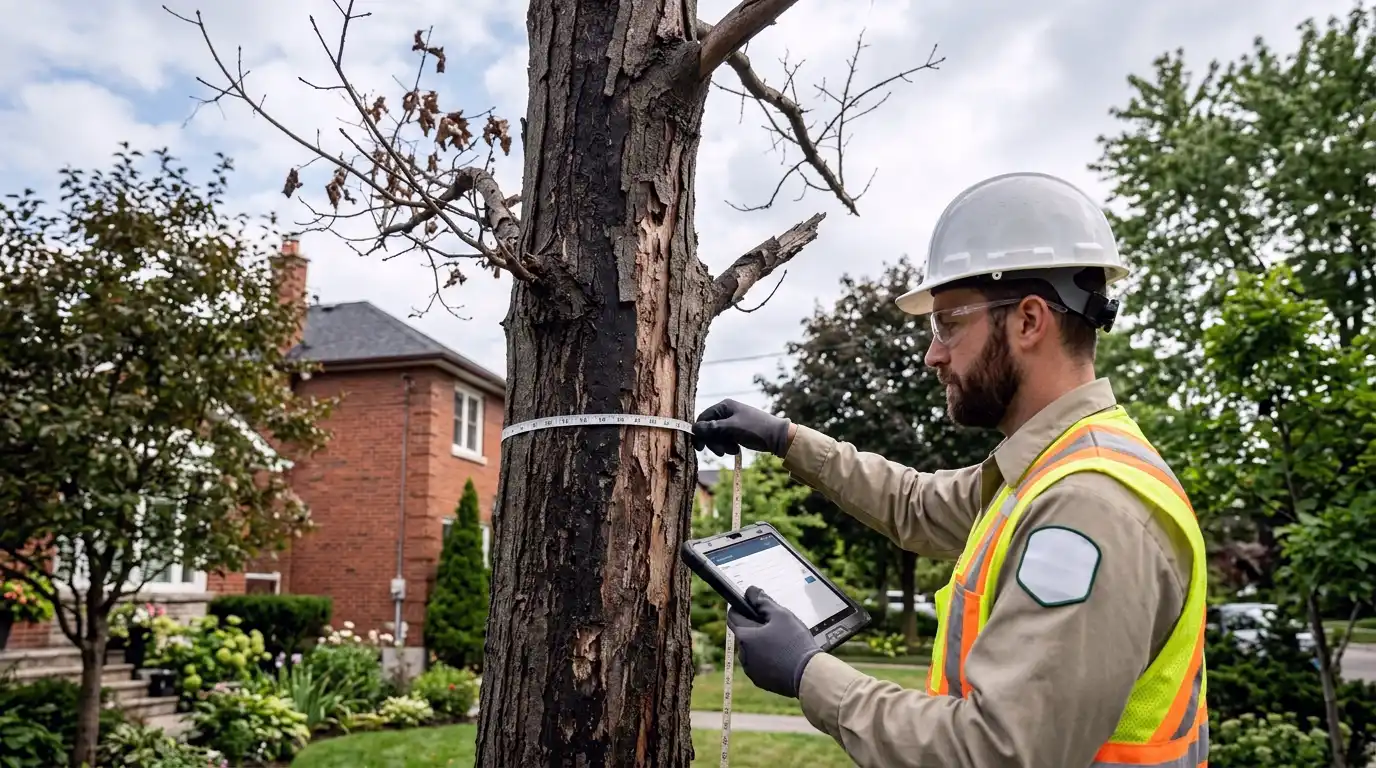
If you ask a qualified arborist to review a dead tree, the documentation may include:
- Tree species, approximate size, location, and site context
- Photos of the trunk, canopy, bark, branch tips, base, and surrounding area
- Notes on whether live tissue is present
- Visible indicators such as bark slippage, brittle branches, decay, fungal activity, cavities, or missing foliage
- Proximity to structures, walkways, neighbouring properties, utilities, and public areas
- Recommendations for next steps
Dangerous Dead Trees and 311
If a privately owned tree presents an immediate danger, Toronto advises contacting 311 to submit a service request. City staff may investigate concerns about a dangerous private tree. If a tree has already partially failed, is dropping large limbs, is leaning after a storm, or appears to threaten people, buildings, public space, or critical access, do not treat it like a routine landscaping task.
A qualified arborist or tree care professional may also discuss the visible hazard, removal options, documentation, timing, and safe next steps with the property owner.
Do not assume that urgency removes every responsibility. City-tree ownership, ravine conditions, utilities, property lines, neighbour issues, and safety documentation may still matter.
Dead Tree Concern?
Emergency Removal for Dead Trees
Emergency situations should be handled carefully. If the tree presents an immediate danger to people, buildings, public space, utility access, or critical infrastructure, contact 311 and speak with a qualified arborist or qualified tree care professional.
Emergency conditions may include a tree that has partially failed, a cracked trunk, hanging major limbs, visible root failure, or a sudden lean after a storm. A general concern that a tree may fall someday is not the same as an immediate danger.
If work is required urgently,
Replacement Tree Questions
If the tree is truly 100 per cent dead and no permit is required, a formal permit condition for replacement planting may not apply in the same way it would for an approved protected-tree removal. That said, replacement planting can still be a smart choice for shade, property value, stormwater benefits, privacy, and neighbourhood canopy.
If the tree is not fully dead, if City authorization is required, or if the property is affected by ravine, City-tree, development, or conservation authority rules, replacement planting may still come up. Confirm current requirements directly with the City of Toronto or a qualified arborist.
Related Guides:
- How to Get a Tree Removal Permit in Toronto
- How Long Does a Tree Permit Take in Toronto?
- What Happens If You Remove a Tree Without a Permit
- Signs Your Tree Is Dead or Dying
- Arborist Report Requests
Dead Tree Removal Permit in Toronto: What It Costs to Remove a Dead Tree in Toronto
Dead tree removal pricing depends on size, height, access, brittleness, decay, lean, nearby structures, utilities, equipment needs, debris handling, stump work, and cleanup terms. Dead trees can sometimes be more complex than healthy trees because decayed or brittle wood may behave unpredictably.
Frequently Asked Questions
Does Toronto require a permit to remove a dead tree?
Toronto’s current guidance says a permit is not required to remove a tree that is 100 per cent dead. If the tree is only partly dead, declining, hazardous but still living, City-owned, near a ravine, or near another protected tree, confirm requirements before work begins.
What if my dead tree is dangerous?
If a privately owned tree presents an immediate danger, Toronto advises contacting 311 to submit a service request. You may also speak with a qualified arborist or qualified tree care professional to discuss documentation and safe next steps directly.
How do I prove a tree is 100 per cent dead?
A qualified arborist may document the tree’s condition using photos, visual inspection, branch condition, bark condition, signs of live tissue, decay, fungal activity, and site context.
Can a dead tree still create bylaw concerns?
Yes. A partly dead tree, City-owned tree, boundary tree, ravine-area tree, or removal that may damage another protected tree can still create bylaw or ownership concerns. Confirm before authorizing work.
How much does dead tree removal cost in Toronto?
Dead tree removal pricing varies by size, condition, access, brittleness, decay, equipment, cleanup terms, and stump work. Confirm all pricing, scope, payment terms, and cleanup terms directly with the qualified tree contractor.