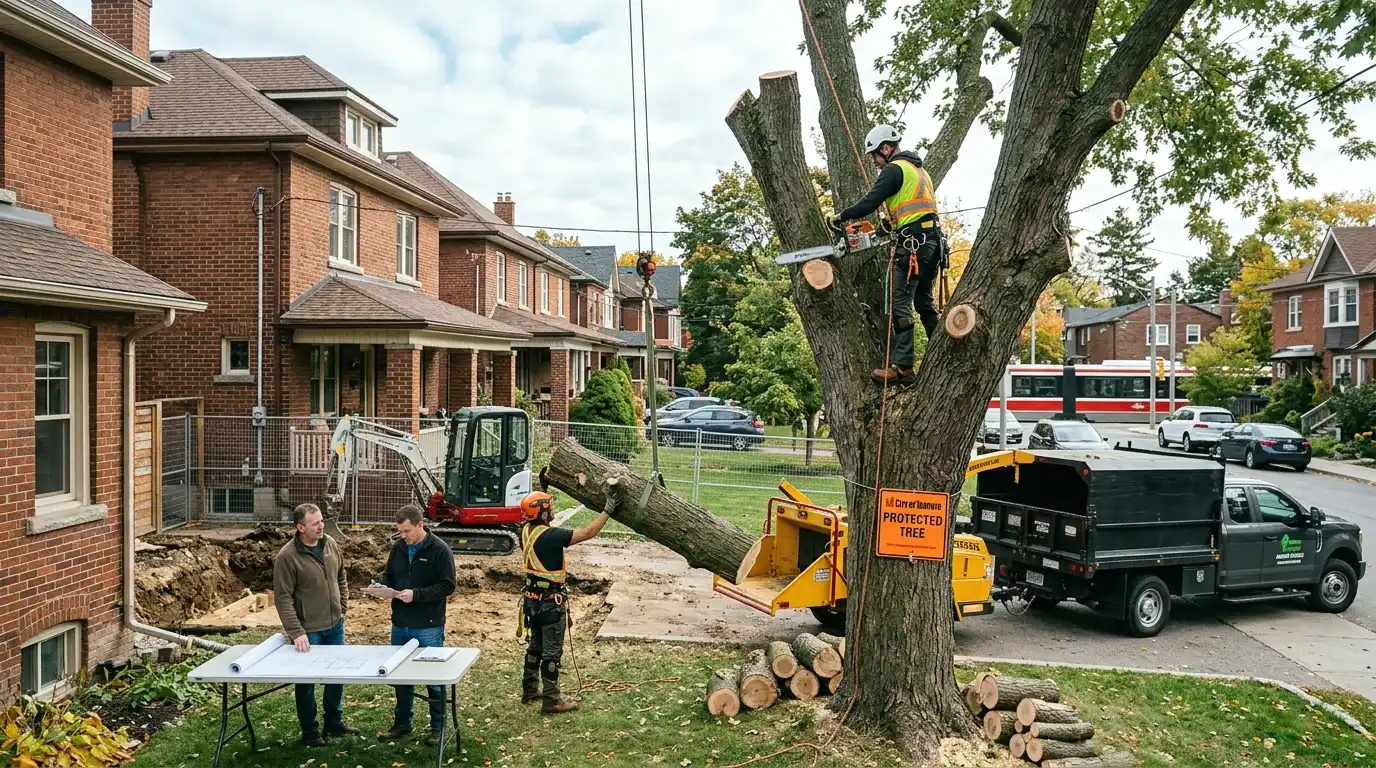
Tree removal cost for a home addition in Toronto can vary with tree size, access, risk, required approvals and the exact scope of work. A home addition in Toronto can create tree-related costs long before a tree is actually removed. The project may involve protected private trees, City-owned trees, neighbouring trees, ravine or natural feature rules, excavation, utility trenching, grade changes, equipment access, material storage, and construction activity near root zones. If these issues are missed during planning, the result can be permit delays, redesign, contractor disputes, or by-law risk.
If the project is a pool rather than an addition, the tree removal for pool installation in Toronto guide covers the permit and sequencing differences.
Tree Removal Cost for a Home Addition in Toronto: When Tree Work Becomes Part of a Home Addition
Not every home addition triggers a tree removal permit. The concern begins when construction activity may injure or remove a by-law-protected tree. In Toronto, private trees with at least one stem measuring 30 cm or greater in diameter are generally protected under the private tree by-law. City-owned trees are protected at any size, and ravine or natural feature areas may involve additional restrictions.
The most common construction-related tree issues are not limited to the building footprint. Excavation, footing work, drainage work, utility trenching, equipment access, material storage, temporary driveways, grade changes, demolition, retaining walls, and staging can all affect roots, soil, trunk, or branches. A tree can remain standing and still be injured by construction activity.
For Toronto additions, the practical question is whether any protected tree is close enough to the proposed work that roots, soil, trunk, branches, or required protected areas may be affected. That should be checked before finalizing drawings, pricing the project, or scheduling construction.
The Permit and Documentation Pathway
For a home addition, tree-related documentation may be needed where a protected tree could be injured, removed, or affected by construction. Depending on the project, the City or a qualified professional may require details such as tree location, species, DBH, condition, proposed work limits, construction access, excavation area, utilities, grading, and how nearby protected trees will be handled.
Where a protected tree is proposed for removal, a City permit process may apply. Where a protected tree is proposed to remain but could be affected by construction, additional construction-tree documentation and site restrictions may be required. The exact documents, fees, and submission sequence should be confirmed directly with the City, architect, designer, contractor, or qualified arborist retained for the project.
Tree-related budget items that may apply to a Toronto home addition:
- qualified arborist review: site visit, tree inventory, DBH measurement, condition notes, and construction-impact discussion
- Written report where required: report scope, intended use, limitations, and fees set by the qualified professional
- City application fees: current fees should be confirmed directly with the City before submission
- Replacement planting or cash-in-lieu: may apply depending on the permit decision and City requirements
- Tree removal: cost depends on size, species, access, condition, nearby structures, and contractor pricing
- Stump grinding: may be included, excluded, or scheduled separately depending on written scope
- Construction monitoring where required: any visit frequency, fee, and responsibility must be confirmed directly with the qualified professional
- Utility locates: may be needed before digging, stump grinding, trenching, excavation, or soil disturbance
The Sequence That Avoids Delays
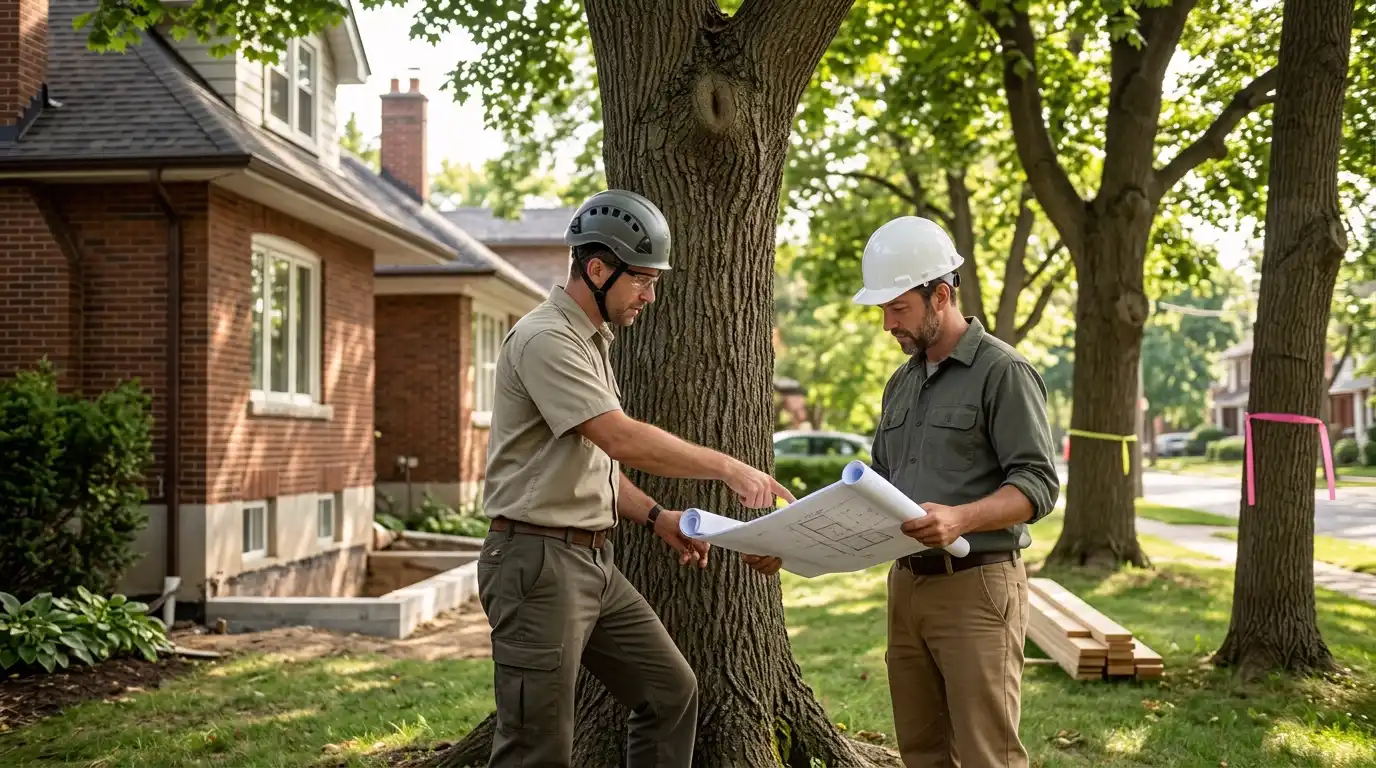
The safest planning sequence is to identify tree constraints before the building permit submission reaches a problem point. If protected trees are discovered late, the project may need extra documentation, redesign, delayed excavation, revised access planning, or revised contractor pricing.
Early review can help determine whether the proposed addition affects a protected tree, whether the design can avoid or reduce tree impacts, whether removal must be considered, and whether utility routes or access paths should be adjusted. Even a small shift in a foundation wall, stair location, drain route, or access path can sometimes reduce tree-related risk.
Property owners should ask their architect or designer to flag trees early in the design process. If a qualified arborist is retained, that professional is responsible for explaining what they reviewed, what documents they can provide, and what issues still need confirmation from the City or project team.
What Happens if Construction Starts Without Proper Tree Review
Construction activity that injures or removes a protected tree without authorization can create serious problems for the property owner. Toronto treats tree injury broadly, and failing to protect a tree according to City standards can be considered tree injury. Potential consequences can include enforcement review, project delay, additional documentation, replacement requirements, financial penalties, and disputes between the homeowner, contractor, designer, and other parties.
The property owner should not assume that the contractor, designer, landscaper, excavator, or tree worker has already checked the tree rules. Responsibility should be assigned clearly in writing before work begins. Ask who is confirming protected trees, who is checking City rules, who is responsible for any tree-related documents, who requests utility locates, and who pays for changes if the tree issue is discovered late.
If a contractor damages a protected tree, questions about a dispute over payment, responsibility, insurance, schedule delays, fines, replacement planting, or corrective work should be confirmed in writing with the relevant qualified professional before work begins.
Planning a Home Addition Near Trees in Toronto?
What Trees Are Commonly Affected by Toronto Home Additions
Toronto home additions often involve mature backyard and side-yard trees that were planted long before the house expansion was designed. Silver maples, Norway maples, Manitoba maples, spruce, cedars, locusts, mulberries, ash, fruit trees, and older ornamental trees can all become part of the planning conversation depending on their location and size.
Rear additions may affect trees near the back wall, patio, garage, laneway, fence line, or neighbouring property. Side additions may affect hedges, cedars, narrow access paths, and shared-root zones. Basement underpinning, new drains, walkouts, rear-yard suites, decks, retaining walls, and utility upgrades can also affect trees even if the main building footprint avoids the trunk.
Larger mature oaks, beeches, elms, maples, and other significant canopy trees may receive closer review because of their size, condition, public benefit, and long-term canopy value. Property owners should not assume that removal will be approved simply because a proposed addition would be easier without the tree.
Utility Trenching Through Root Zones
Home additions frequently involve upgraded electrical service, gas lines, water connections, drainage changes, sump discharge routing, or other underground work. These activities can affect roots and soil, especially where open trenching cuts through the protected area around a tree.
Where a route crosses a protected tree’s root area, the project team may need to discuss alternatives such as rerouting, directional boring, shallower or deeper service paths where appropriate, or construction methods that reduce root injury. The correct approach depends on the tree, utility, soil, contractor, engineering requirements, and City review.
Utility locates may be required before trenching, excavation, stump grinding, root pruning, or soil disturbance. Ontario One Call and any private utility investigation should be handled by the responsible party identified in the written project scope.
Tree Protection Zones and Construction Activity
Toronto uses minimum Tree Protection Zones to help protect by-law-protected trees during construction. These areas are based on trunk diameter and site context. Construction activity inside those areas can injure roots, compact soil, damage bark, alter grades, or affect water and oxygen movement in the root zone.
Common activities that can cause tree injury include excavation, grade changes, soil compaction, material storage, equipment travel, concrete washout, fuel storage, root cutting, trenching, and attaching objects to trees. Even short-term staging can become a problem if heavy materials or machines sit over a root zone.
If a protected tree is being retained near a home addition, the written project plan should clarify what areas are restricted, who is responsible for maintaining those restrictions, what work is allowed, what work is prohibited, and what happens if the contractor needs access that was not originally planned.
Budgeting Without Getting Misled
A single “tree removal cost” number does not capture the full budget for a home addition near protected trees. The homeowner may need to budget for professional review, written documentation where required, City application fees, construction restrictions, replacement requirements, removal, stump grinding, debris handling, utility-locate coordination, monitoring where required, and possible design changes.
Low tree-work pricing can become expensive if it excludes permit-related documentation, stump grinding, cleanup, access protection, utility-locate responsibility, or construction coordination. Compare written scopes instead of comparing only final prices. Ask what is included, what is excluded, who handles City-related questions, and what happens if the City requires changes.
Official and Helpful Resources
- City of Toronto: Tree and Ravine Protection
- City of Toronto: When to Apply for a Tree or Ravine Permit
- City of Toronto: How to Apply for a Tree or Ravine Permit
- City of Toronto: Tree Protection Policy and Specifications for Construction Near Trees
- City of Toronto: How to Report a Tree or Ravine Contravention
- Ontario One Call: Homeowners
- ISA: Find an Arborist
Frequently Asked Questions
Does a home addition in Toronto always require a tree permit if trees are nearby?
Not always. Toronto protects private trees that are 30 cm or larger in diameter, measured at 1.4 m above ground, and City-owned trees are protected at any size. If the addition, excavation, grading, access, staging, utility work, or material storage may injure a protected tree or enter the minimum Tree Protection Zone, permit-related review may be required. Property owners should confirm requirements directly with the City or a qualified professional before construction begins.
Can tree-related documentation and a building permit be handled at the same time in Toronto?
Tree-related documentation is often reviewed alongside construction planning, but the correct sequence depends on the project, the trees, and City requirements. Property owners should ask their architect, designer, contractor, qualified arborist, or the City how tree documentation should be prepared and submitted.
What tree-related costs should I budget for during a Toronto home addition?
Tree-related costs may include qualified arborist review, written reports where required, City application fees, replacement planting or cash-in-lieu where required, tree removal, pruning, stump grinding, utility-locate planning, construction monitoring where required, and contractor access or cleanup costs. Actual pricing depends on the site, number of trees, tree size, complexity, City requirements, and qualified tree contractor pricing.
How close can a home addition be to a protected tree in Toronto?
Toronto uses minimum Tree Protection Zones based on trunk diameter and other site conditions. Construction activity, excavation, grade changes, storage, access, trenching, and soil disturbance within the protected area may be restricted unless reviewed and approved through the proper process. The exact clearance should be confirmed through City guidance and any qualified arborist retained for the project.
Do I need a permit if the tree near my addition will not be removed?
Possibly. A protected tree does not need to be removed for permit concerns to arise. Excavation, trenching, equipment access, grade changes, material storage, root cutting, compaction, and other construction activity can injure a protected tree. If construction may affect a protected tree, property owners should confirm the required City process before work begins.
Related Guides
- Tree Removal Permit Toronto
- Tree Removal Cost Near a House
- Large Tree Removal Cost Toronto
- How to Read a Tree Removal Quote
- Tree Removal Requests