
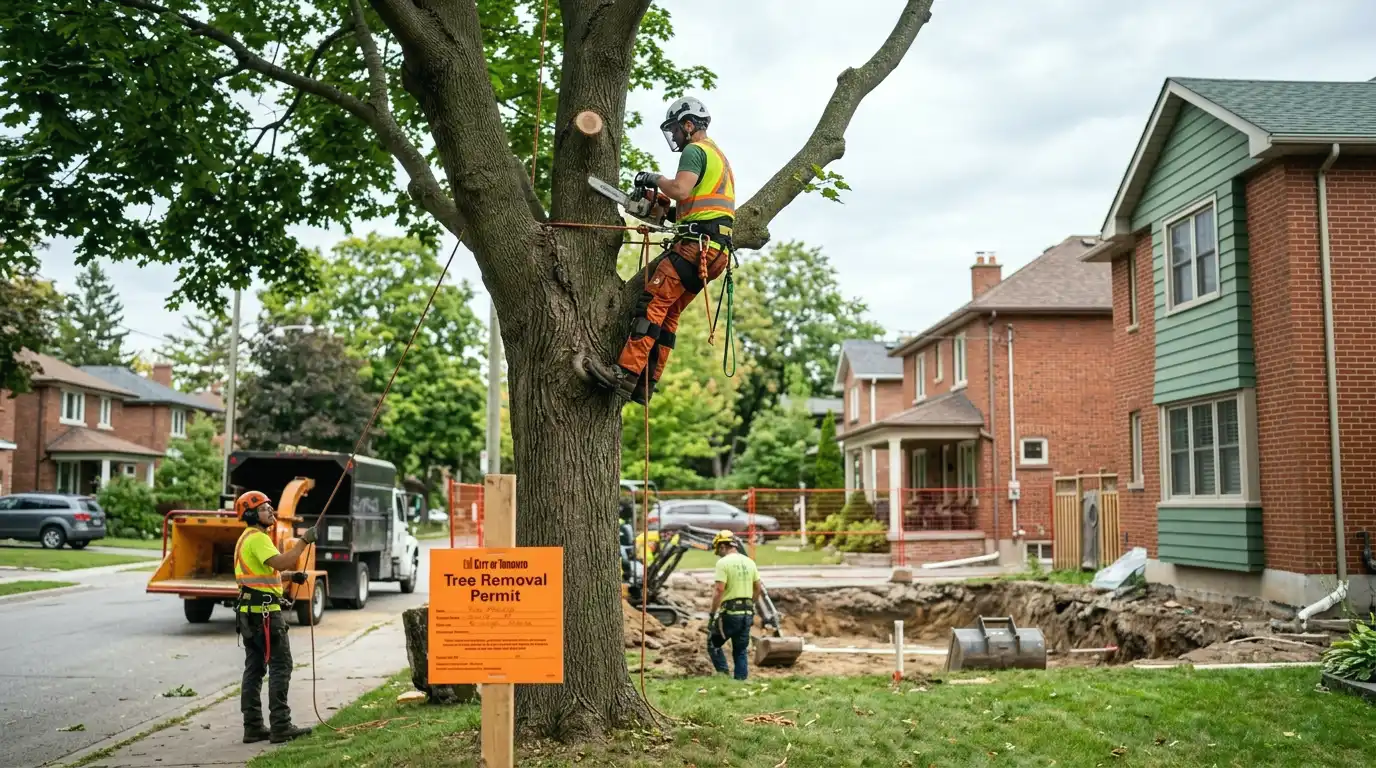
Installing a pool in Toronto can affect tree permits, pool enclosure requirements, excavation planning, root zones, replacement planting, access routes, and neighbour-tree issues. If a mature tree sits inside the proposed pool footprint or close to the excavation area, the tree question should be checked before the pool schedule is locked in. A protected tree generally cannot be injured or removed until the required City authorization is issued.
For current City information, start with Toronto’s Tree and Ravine Protection resources and the City’s Pool Fence Enclosures guide.
The Sequence That Usually Works Best
The safer planning order is to confirm the pool concept, identify trees that may be affected, check whether tree permit requirements apply, confirm pool-related City requirements, then schedule tree work and excavation only after required approvals and conditions are understood. Tree issues should not be left until the excavation crew is already booked.
Toronto generally protects private trees with a diameter of 30 cm or more measured at 1.4 metres above ground. The City also protects City-owned trees, and ravine or natural feature areas have separate rules. A pool project does not automatically exempt a protected tree from permit requirements. If the tree must be removed or injured for the pool footprint, access route, grading, trenching, or drainage, confirm the correct process before work begins.
Tree Permit Questions for Pool Projects
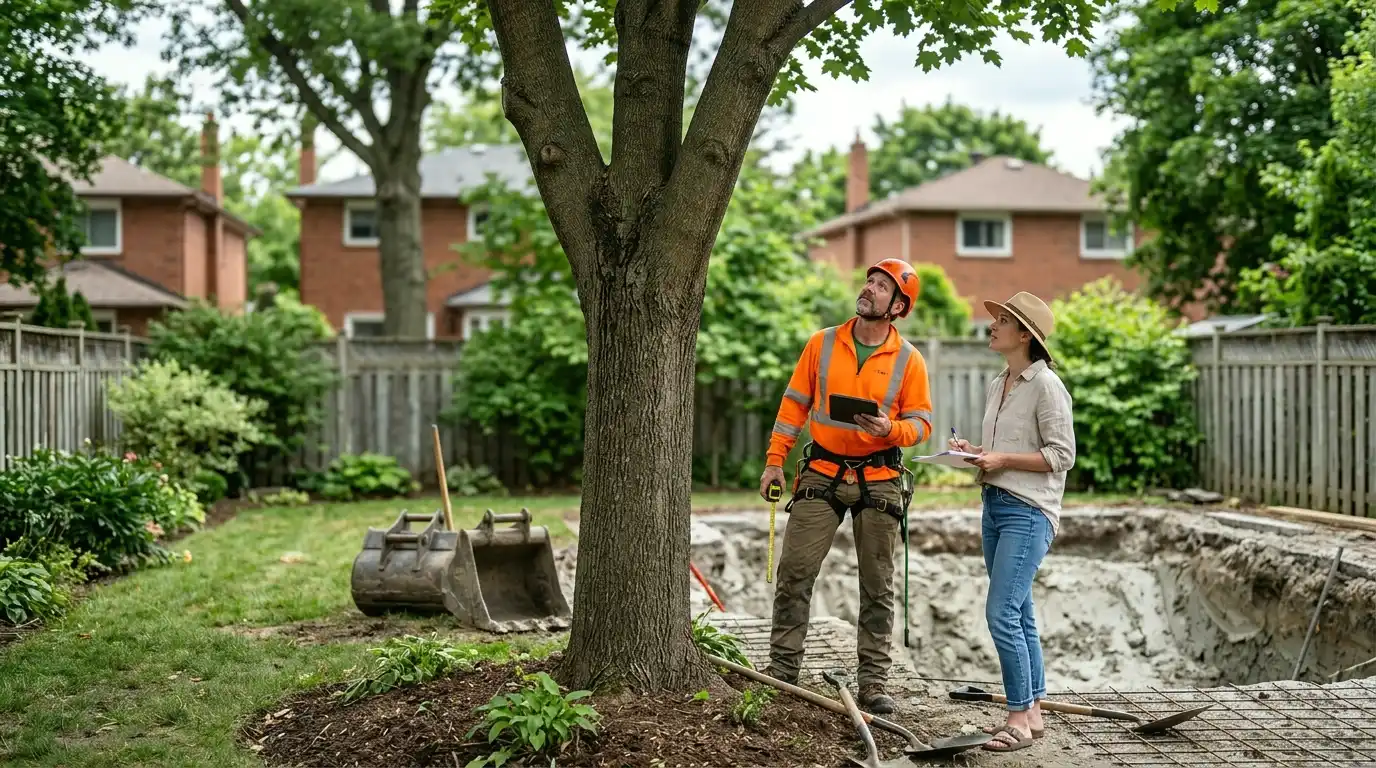
Tree-related pool files are not only about whether a tree is being cut down. Excavation, trenching, soil compaction, equipment access, grading changes, pool drainage, hardscape installation, and material storage can all injure a protected tree. If retained trees are close to the proposed pool, the design should be checked before construction begins.
Useful tree information may include species, DBH, tree location, condition, proximity to the proposed pool, visible defects, root-zone concerns, access routes, excavation limits, grading changes, and whether the tree is private, City-owned, neighbouring, boundary-related, or in a ravine or natural feature area. A qualified arborist may discuss assessment and documentation with the property owner.
Pool and tree planning checklist
- Early design stage: Confirm the proposed pool footprint, access route, excavation limits, drainage path, and hardscape layout.
- Tree review: Identify private trees 30 cm DBH or larger, City trees, neighbouring trees, boundary trees, ravine trees, and replacement trees.
- Permit check: Confirm whether the pool project may injure or remove a protected tree, ravine, or natural feature.
- Pool enclosure check: Toronto requires a Zoning Applicable Law Certificate before applying for a Pool Fence Enclosure Permit.
- Scheduling: Do not schedule protected tree injury/removal until required City authorization and conditions are clear.
- Replacement planning: Confirm whether replacement planting or cash-in-lieu may apply if a protected tree is approved for removal.
- Neighbour context: Check whether any neighbouring or boundary tree roots or branches may be affected by excavation or access.
Trees Near the Pool That Are Not Being Removed
Not every tree near a proposed pool needs to come out. Some trees can provide valuable shade, privacy, and cooling around a pool area. The concern is whether the pool excavation, access, hardscape, grading, drainage, or utility work may injure the retained tree.
Pool excavation can cut roots or change soil conditions even when the trunk is outside the pool footprint. Equipment movement and material staging can compact the root zone. Drainage changes can alter moisture conditions. Retaining walls, patio bases, pool equipment pads, gas lines, electrical runs, and fence-post work can all create additional root conflicts.
If a retained tree is protected, the pool design should be reviewed early enough that the footprint, access route, or construction method can still be adjusted. Once the pool design, contractor schedule, and excavation sequence are locked in, fixing tree conflicts becomes more expensive and more stressful.
Replacement Planting and Cash-in-Lieu
When Toronto approves the removal of a protected private tree, permit conditions can include mandatory replacement planting. A pool can reduce available planting space because the pool, deck, patio, equipment area, fence layout, and access paths take up much of the yard. Replacement planting needs to be realistic before the permit conditions are accepted.
Where there is inadequate space for replanting, Toronto’s current tree permit guidance says the City will accept cash-in-lieu of replanting in the amount of $583 per tree. Fees and conditions can change, so property owners should confirm current amounts and requirements directly with the City before relying on older articles, saved notes, or contractor assumptions.
A qualified arborist may discuss replacement planting options, site constraints, and documentation.
Planning a Pool Near a Protected Tree?
Neighbouring Trees and Pool Excavation
Pool excavation near a property line can affect neighbouring or boundary trees even when the trunk is not on your property. Roots can extend into the excavation area, and cutting large roots can injure or destabilize a tree. Neighbouring and boundary trees can also raise civil, legal, permit, access, and consent questions.
Toronto says pruning trees on neighbouring private property is a civil/private-property issue between property owners. If rights are unclear, property owners should seek legal advice. Before cutting roots or branches near the boundary, document the issue, speak with the neighbour where practical, and discuss the tree impact with a qualified arborist.
If the neighbouring or boundary tree is protected, City permit requirements may also need to be checked before root cutting, excavation, pruning, or removal occurs. Do not assume the pool contractor can simply cut roots encountered during excavation without consequences.
Pool Fence Enclosures and Tree Planning
Toronto’s pool fence enclosure process is separate from tree permit review, but the site plan should still make practical sense. The City’s current application page says a Zoning Applicable Law Certificate is required before applying for a Pool Fence Enclosure Permit. A pool enclosure must also comply with Chapter 447 before the pool is used.
That means the pool layout, fence layout, access gates, equipment locations, grading, and landscaping should be considered together with tree locations. A fence route or gate location that cuts through major roots, conflicts with a retained tree, or blocks future replacement planting can create avoidable problems.
What Can Go Wrong If Tree Review Happens Too Late?
The main risk is delay. If a protected tree must be removed or injured but no permit process has started, the pool schedule may stall. If a retained tree is too close to excavation, the design may need revision. If replacement planting space is not considered, permit conditions may conflict with the final pool and patio layout.
There is also enforcement risk. Toronto states that injuring or removing a bylaw-protected tree without a permit is illegal and can lead to enforcement action. Tree-related contraventions can lead to fines, stop-work issues, orders to comply, or other consequences.
The practical rule is simple: check trees before finalizing the pool design. It is easier to adjust the layout on paper than to redesign after a permit issue appears or after excavation has started.
Frequently Asked Questions
Do I need a tree removal permit to remove a tree for a pool in Toronto?
If the tree is protected, a permit may be required before injury or removal. Toronto generally protects private trees with a diameter of 30 cm or more measured at 1.4 metres above ground, all City-owned trees, and trees or vegetation in ravine or natural feature protection areas. A pool project is not an automatic exemption.
Can I submit pool-related applications and tree permit materials around the same time?
Pool-related permits and tree-related permits are separate City processes. A pool fence enclosure application requires a Zoning Applicable Law Certificate before the Pool Fence Enclosure Permit. Tree injury or removal permissions are handled through Toronto’s Tree and Ravine Protection process where protected trees, ravines, or natural features are affected. Confirm sequencing directly with the City and your project professionals.
Can pool excavation injure a protected tree even if the tree is not removed?
Yes. Excavation, trenching, grading, soil compaction, drainage changes, equipment access, hardscape installation, and material storage can injure a protected tree. If a retained tree is close to the pool work area, tree-related requirements should be checked before work begins.
What happens if there is not enough space for replacement planting after a pool is installed?
Toronto tree removal permits can include replacement planting conditions. Where there is inadequate space for replanting, Toronto currently states that it will accept cash-in-lieu of replanting in the amount of $583 per tree. Confirm current fees and requirements directly with the City because they can change.
Who is responsible for tree-related pool project documents and work?
The qualified arborist, pool contractor, designer, builder, or other professional retained by the property owner is responsible for their own assessment, documents, recommendations, pricing, scheduling, work performed, communication, qualifications, insurance, WSIB, warranties, and service-related issues.
Related Guides