
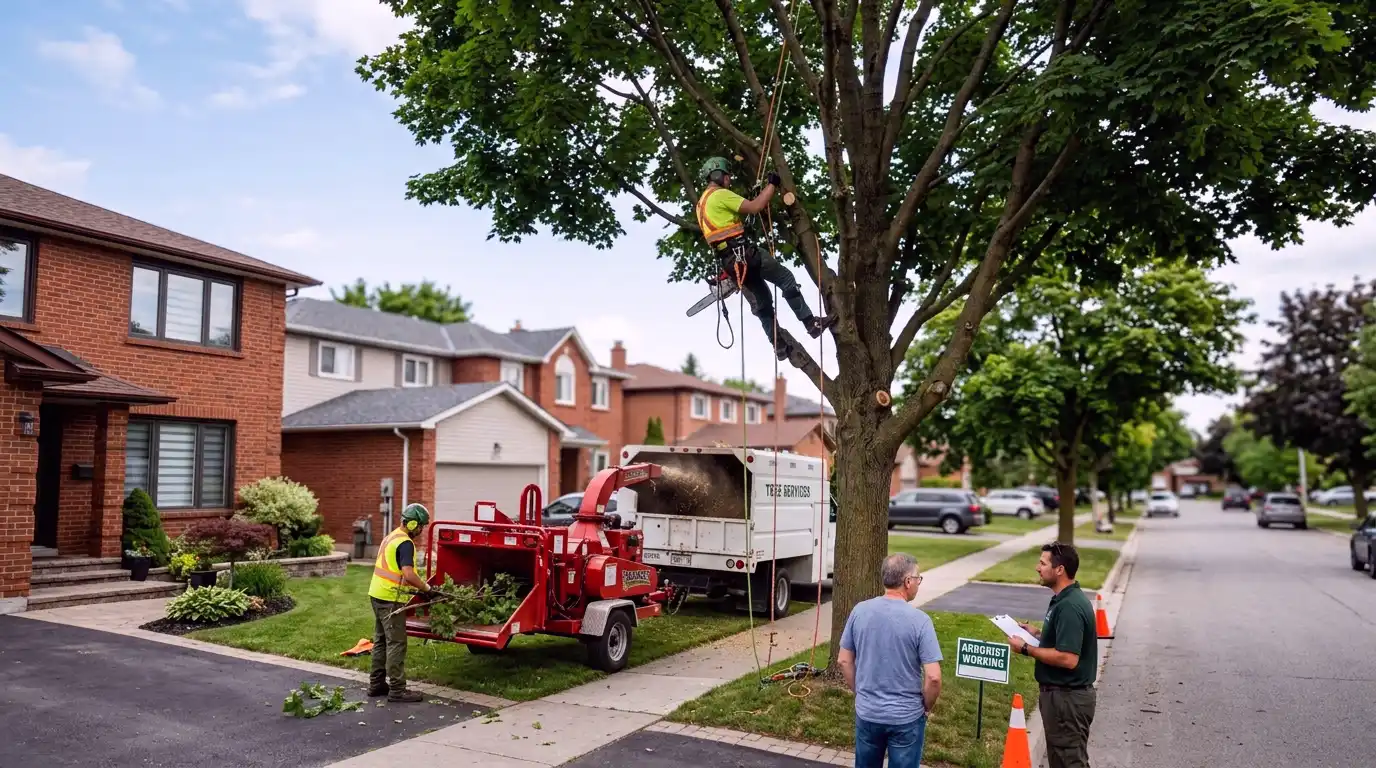
Tree services in Pickering can involve pruning, removal, permit checks, hazard assessment and other work depending on the property. Tree work in Pickering needs more care than the old “no permit needed” advice suggests. Pickering does not operate like Toronto or Mississauga with a simple city-wide private-tree diameter threshold, but the City does regulate tree removal in designated Tree Protection Areas. These areas usually run through and beside watercourses, green spaces, shorelines, significant valley lands, stream corridors, wetlands, and significant woodlands. That means a tree on one ordinary-looking residential lot may be simple, while another tree a few streets away may need review before work begins.
The Permit Picture in Pickering
The City of Pickering identifies Tree Protection By-law 8073/24 as the current by-law regulating the injury, destruction, or removal of trees in Tree Protection Areas. The City says a permit is required to remove any tree in a protected area, and that protected areas usually run through and adjacent to watercourses and green spaces.
This is different from saying every private tree in Pickering needs a permit. The City also says permits are not required for trees that are not located in the designated protection area. The correct question is therefore not only “Is the tree on private property?” but also “Is the tree inside or near a Tree Protection Area, conservation authority regulated area, woodland, shoreline, stream corridor, valley land, wetland, or development-controlled site?”
Pickering’s official guidance also says dead, dangerous, diseased, or severely injured trees in designated protection areas still require permits for removal, although the fee treatment may differ depending on whether a certified arborist report is submitted or the City arborist must inspect. Property owners should confirm the current process, forms, fees, exemptions, and mapping directly with the City before work begins.
Pickering tree work: what to check before approval
- Is the tree outside or inside a designated Tree Protection Area?
- Is the tree near Duffins Creek, Frenchman’s Bay, Lake Ontario, Krosno Creek, wetlands, valley lands, slopes, shorelines, or stream corridors?
- Is the tree municipal, boulevard, private, shared with a neighbour, or part of a development approval?
- Could TRCA or CLOCA have jurisdiction depending on the exact property?
- Could Durham Region’s Regional Woodland By-law apply to a woodland or larger treed property?
- Does the work involve pruning only, removal, stump grinding, excavation, grading, site alteration, or construction?
- Will Ontario One Call locates be needed before stump grinding, digging, root work, or soil disturbance?
Tree Services in Pickering: Tree Removal in Pickering
Pickering tree removal requests vary widely by neighbourhood. Bay Ridges, Liverpool, Dunbarton, Amberlea, Rosebank, Highbush, Duffin Heights, Brock Ridge, Woodlands, Village East, Rouge Park, Seaton, and rural northern Pickering all have different lot sizes, access conditions, tree ages, nearby targets, and regulatory context.
Some removals may be straightforward when the tree is fully private, outside a designated Tree Protection Area, away from conservation features, and easy to access. Others may involve tight townhouse gates, narrow side yards, estate-lot canopy trees, overhead wires, fences, decks, pools, neighbouring properties, slopes, creeks, wetlands, or shoreline conditions.
Before approving removal, property owners should confirm whether debris hauling, log removal, stump grinding, cleanup, permit-related documents where applicable, conservation authority discussion, utility-locate responsibility, access protection, and payment terms are included in writing.
Tree Pruning and Trimming in Pickering
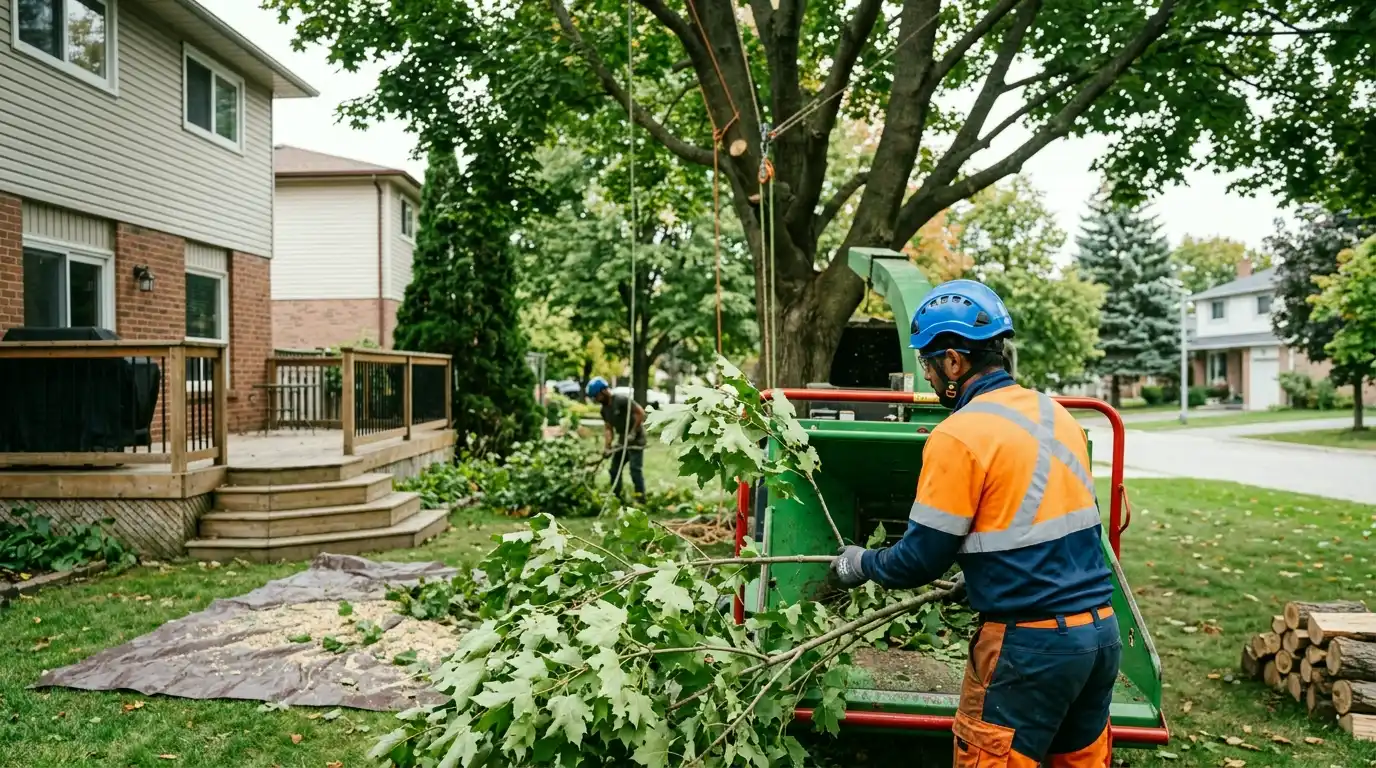
Pruning in Pickering can involve roof clearance, driveway clearance, deadwood, storm damage, cedar hedges, branches over neighbouring property, mature estate trees, and young-tree structure in newer subdivisions. Good pruning should be based on species, condition, branch size, objective, season, access, and long-term tree structure.
Pickering’s by-law includes pruning carried out according to good arboricultural practices among the exemptions in the by-law context, but that does not mean every cut is safe or unrestricted. Heavy canopy removal, topping, root cutting, improper pruning, or work in a protected area can still create tree-health, safety, neighbour, or regulatory issues.
Stump Grinding in Pickering
Stump grinding should be scoped separately unless the written tree removal estimate clearly includes it. Pickering properties range from compact townhouse yards in Duffin Heights and Seaton to wider estate lots in Highbush and Rosebank. Gate width, steps, slopes, patio layouts, fences, utilities, stump diameter, and machine access all affect whether grinding is practical and what equipment may be needed.
Ontario One Call says homeowners must request public utility locates at least 5 business days before digging. Stump grinding, root pruning, excavation, root barrier work, driveway work, planting, and other soil disturbance may require locates. Ontario One Call also notes that homeowners are responsible for private underground infrastructure such as lines to pools, sheds, detached garages, security cameras, and similar private systems.
Property owners should ask whether the stump-grinding scope includes grind depth, visible roots, cleanup, removal of grindings, backfill, lawn restoration, return visits, locate responsibility, and private utility concerns.
Arborist Reports and Permit-Related Review in Pickering
Arborist reports may become relevant in Pickering when a tree is in a designated Tree Protection Area, when a dead or dangerous tree in a protected area needs documentation, when a property is near a regulated natural feature, when development or construction is involved, when Durham Region woodland rules may apply, or when insurance, neighbour, or property-sale concerns require a written opinion.
If a report is needed, a qualified arborist is responsible for explaining report scope, credentials, limitations, cost, timing, intended use, and whether submission support is included. A report is not a guarantee that the City, TRCA, CLOCA, Durham Region, an insurer, a neighbour, or a contractor will accept a recommendation or approve the proposed work.
Conservation Authority and Natural Feature Context
Pickering includes properties close to Duffins Creek, Frenchman’s Bay, Krosno Creek, the Lake Ontario shoreline, stream corridors, valley lands, wetlands, slopes, significant woodlands, and other natural features. Conservation-authority permits are tied to regulated development or site-alteration activities such as construction, grading, fill, shoreline work, or interference with wetlands and watercourses; ordinary tree cutting is not automatically a conservation-authority permit trigger simply because a property lies in a watershed.
Pickering spans two conservation-authority jurisdictions. City planning material maps Rouge River, Petticoat Creek, Duffins Creek, Carruthers Creek and much of the Lake Ontario waterfront within TRCA jurisdiction, while the Lynde Creek watershed portion is within CLOCA jurisdiction. Exact property location and the proposed activity determine which authority, if any, needs to be contacted.
Durham Region Woodland Rules
Durham Region has a Regional Woodland By-law regulating the destruction or injury of trees in woodlands in the Region. This is usually different from a single backyard tree on a typical urban lot, but it can matter for larger rural properties, treed parcels, naturalized areas, estate lands, and development-related clearing in northern Pickering or other areas with woodland conditions.
Pickering’s own Tree Protection By-law also recognizes overlap with Durham Region woodland governance. If a property contains a larger treed area, removal is connected to development, or multiple trees are being cleared, confirm the applicable rule before authorizing work.
Emergency Tree Requests in Pickering
Storms, lake-effect weather, saturated soil, ice, high winds, and freeze-thaw cycles can create urgent tree concerns across Pickering. Large branches may split, shallow-rooted trees may lean, dead ash may become brittle, and trees near creek or shoreline areas may be affected by wet soil or slope conditions.
If a tree is on a structure, near wires, blocking access, leaning suddenly, or creating immediate danger, keep people away and contact the proper emergency, utility, municipal, or conservation authority channel where appropriate. Do not approach downed wires, hanging limbs, split trunks, or partially uprooted trees.
Neighbourhoods Covered in Pickering
Pickering tree requests may come from older waterfront and urban neighbourhoods, established suburban streets, estate areas, newer subdivisions, and rural hamlets. Bay Ridges and Frenchman’s Bay area properties may involve shoreline, wind exposure, and regulated-feature questions. Liverpool, Dunbarton, Amberlea, Village East, Brock Ridge, and Woodlands often involve mature residential trees and access constraints. Rosebank and Highbush may involve larger canopy trees on bigger lots.
Duffin Heights and Seaton may involve newer plantings, tight access, townhouse conditions, and subdivision-related restrictions. Rural Pickering, including Greenwood, Brougham, Claremont, and northern properties, may involve woodland, agricultural, conservation, or development considerations. The qualified professional must confirm the actual site, ownership, access, risk, scope, and rules before work begins.
Need to Send a Pickering Tree Request?
Official and Helpful Resources
- City of Pickering: Trees
- City of Pickering: Tree Protection By-law 8073/24
- TRCA: Duffins Creek Watershed
- TRCA: Planning and Permits
- CLOCA: Planning Services
- CLOCA: Inquiries and Permits
- Durham Region: Regional Woodland By-law
- Ontario One Call: Homeowners
- ISA: Find an Arborist
Related service area: See the Areas Served information for local coverage.
Frequently Asked Questions
Do I need a permit to remove a tree in Pickering?
Pickering does not use a broad city-wide private-tree diameter threshold like Toronto or Mississauga, but it does regulate trees in designated Tree Protection Areas. The City says permits are required to remove trees located in protected areas, which usually run through and adjacent to watercourses and green spaces. Trees outside designated protection areas may not require a Pickering tree permit, but conservation authority rules, Durham Region woodland rules, subdivision conditions, development approvals, municipal trees, and other restrictions may still apply.
What is a Tree Protection Area in Pickering?
Pickering’s Tree Protection By-law 8073/24 applies to designated Tree Protection Areas, including areas containing significant woodlands, shorelines, significant valley lands and stream corridors, and wetlands. A property owner should check the City’s official mapping and current by-law before removing or injuring a tree in or near these areas.
How do TRCA, CLOCA, and other conservation authority rules affect Pickering tree work?
Pickering properties near regulated valleys, wetlands, watercourses, shorelines, or other natural features may need TRCA or CLOCA review when the proposed project includes regulated development or site alteration. TRCA covers the Rouge, Petticoat, Duffins, Carruthers and much of the waterfront watersheds in Pickering; CLOCA covers the Lynde Creek portion. Confirm the property and activity with the appropriate authority before regulated work begins.
How much does tree removal cost in Pickering?
Pickering tree removal cost depends on tree size, species, condition, access, nearby structures, equipment needs, debris handling, stump grinding, urgency, permit-related requirements where applicable, and qualified tree contractor pricing.
Can stump grinding be done in Pickering townhouse yards with narrow gates?
Possibly, depending on gate width, access, slope, stairs, utilities, stump size, machine availability, and qualified tree contractor equipment. Narrow townhouse yards in Pickering, Duffin Heights, Seaton, Village East, and other compact areas may require smaller stump-grinding equipment. Utility locates may be required before grinding or digging.
Do rural Pickering properties need to check Durham Region woodland rules?
They may. Durham Region’s Regional Woodland By-law regulates the destruction or injury of trees in woodlands in the Region. Larger rural properties, treed parcels, development lands, and naturalized areas north of Pickering’s urban area should be reviewed carefully before tree cutting or clearing. Property owners should confirm whether the Regional Woodland By-law applies before authorizing work.
Related Guides and Services
- Tree Removal Permit in Pickering
- Tree Removal Permit in Ajax
- Tree Services in Ajax
- Tree Removal Cost Guide
- Arborist Report Requests
- Emergency Tree Guidance