Milton Tree Rules, Costs and Permit Checks
Tree services in Milton can involve pruning, removal, permit checks, hazard assessment and other work depending on the property. Milton’s tree-care context differs from many older GTA communities. The town includes new subdivisions with compact lots and builder-planted trees, established neighbourhoods with larger shade trees, rural estate properties, creek corridors, Halton Region woodland considerations and western areas influenced by the Niagara Escarpment. Removal, pruning, stump grinding or arborist documentation should be considered with those layers in mind.
Milton Tree Rules: What Homeowners Should Check First
Before arranging tree removal in Milton, the first question is ownership and location. The Town of Milton advises homeowners to make sure a tree is entirely on their property before removing it and recommends consulting a certified arborist where removal is necessary. If the tree is on Town property, such as a street tree, the issue should be reported through Milton’s municipal process instead of being treated as a private removal request.
Milton homeowners should also check whether Halton Region rules apply. Halton Region’s tree by-law can apply to properties containing all or part of a woodland greater than 0.5 hectares or properties partially or entirely within the Regional Greenlands system, now described as part of the Natural Heritage System. This matters for larger rural lots, estate properties, greenlands, woodlots and some properties close to sensitive natural features.
Useful official starting points include the Town of Milton trees page, Halton Region’s Tree By-law page, Conservation Halton permitting and planning, and the Niagara Escarpment Commission development permits page. These links are provided for information only.
Milton tree removal and tree-care checks to consider
- Is the tree entirely on private property, or is it a Town street tree?
- Is the property larger than 0.5 hectares or connected to a woodland or greenlands area?
- Is the property near Sixteen Mile Creek, Bronte Creek headwaters, wetlands, valleys or regulated features?
- Is the property in western Milton near Campbellville, Kilbride, Kelso or the Niagara Escarpment?
- Could Conservation Halton review be needed for development, site alteration or regulated-area work?
- Could the Niagara Escarpment Commission require review for development or land-use changes?
- Is a qualified arborist report needed for insurance, safety, neighbour, permit or planning reasons?
- Are there powerline, access, boundary, neighbour or disposal issues that affect the request?
Tree Work in Milton’s Newer Subdivisions
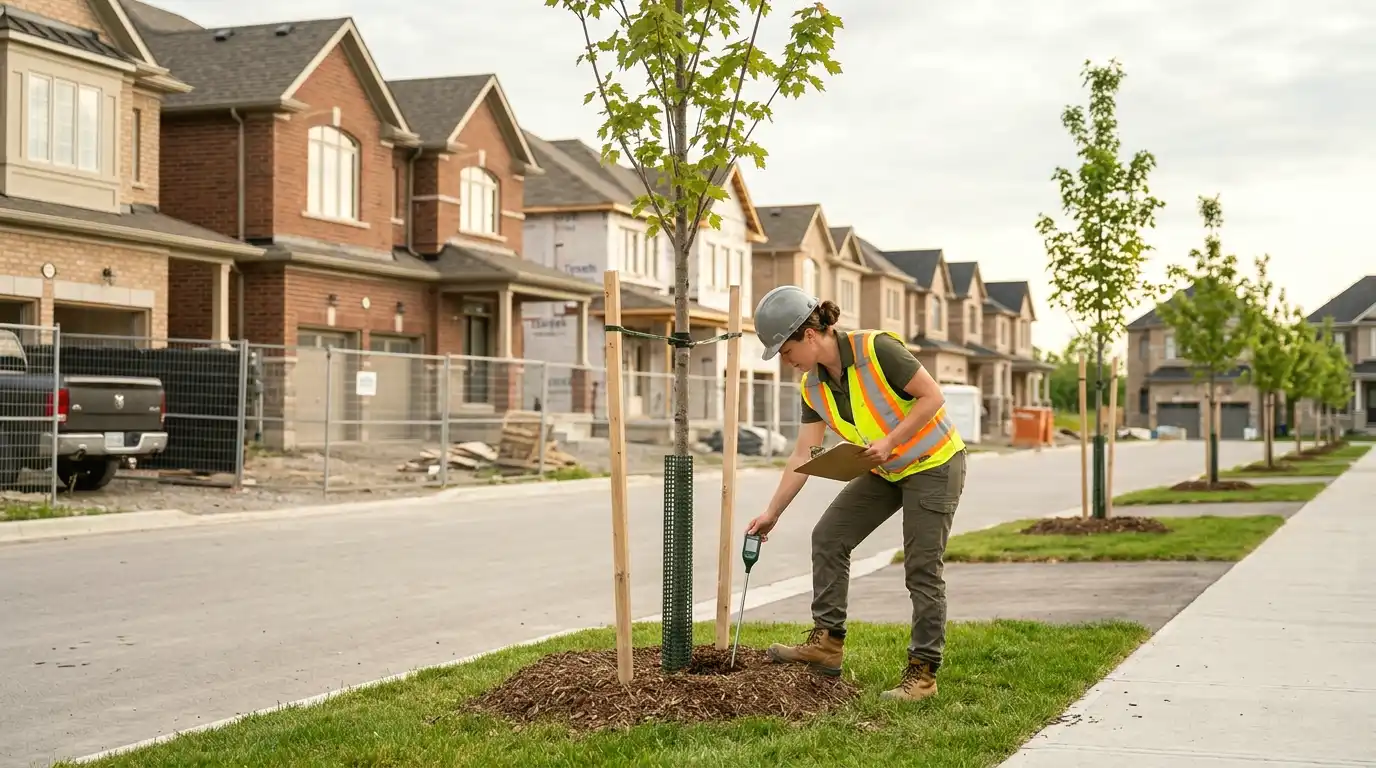
Many Milton tree requests come from neighbourhoods such as Hawthorne Village, Coates, Clarke, Beaty, Scott, Boyne, Harrison, Ford and Dempsey. These areas often have smaller front yards, tight side yards, attached garages, newer fences, deck additions, pools, patios and builder-planted ornamental or shade trees. A tree that looked proportional when planted can eventually conflict with a driveway, walkway, drainage pattern, foundation, fence, retaining wall or planned backyard project.
Common Milton subdivision work includes tree removal, pruning, stump grinding, storm-damaged limb cleanup and clearance pruning. Compact lots, narrow side gates, shared fencing and tight rear yards can change the equipment, labour and disposal approach required for a particular property.
Tree Work in Old Milton and Established Streets
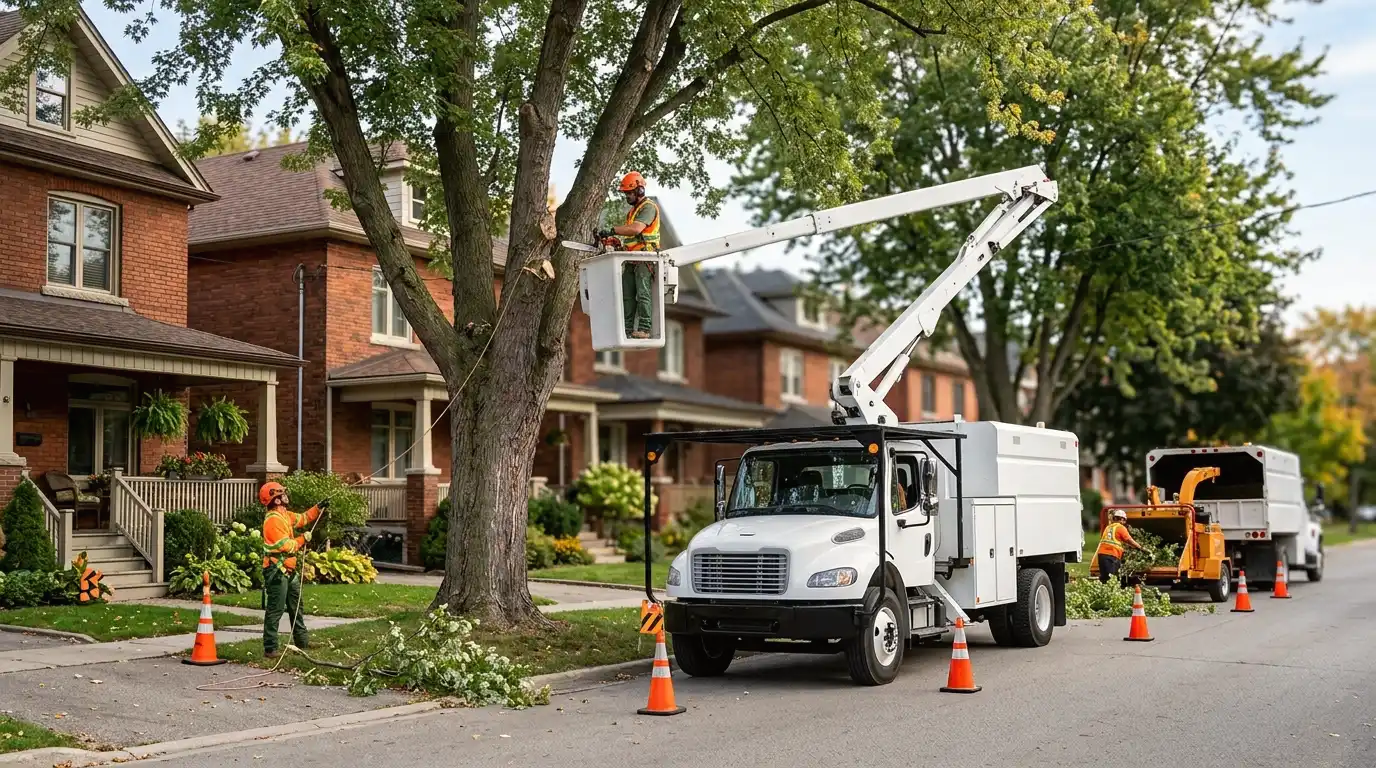
Old Milton and the established streets around Main Street, Ontario Street, Bronte Street, Commercial Street, Martin Street, Mill Street and nearby residential blocks often have larger shade trees, older root systems, tighter driveways, mature landscaping and older structures. Tree work in these areas may involve limited equipment access, overhead utilities, shared property lines, roof clearance issues, garages, fences and mature canopy over neighbouring lots.
In these older areas, homeowners often ask about hazardous limb removal, mature tree pruning, dead tree removal, storm damage, stump grinding after old removals, and arborist documentation for insurance or permit-related discussions. If the tree is close to a sidewalk, boulevard or road allowance, homeowners should confirm whether it is a private tree or a Town tree before arranging work.
For powerline concerns, homeowners should follow the appropriate utility process first. Milton Hydro provides tree-trimming and safety information for electrical equipment and customer-owned powerline situations. Do not prune or remove trees near energized lines unless the proper utility or qualified professional has confirmed safe conditions.
Rural Milton, Campbellville, Kilbride and Escarpment-Area Properties
Rural Milton, Campbellville, Kilbride and properties close to the Niagara Escarpment can involve more than a simple private tree decision. Larger lots may include woodlots, treed boundaries, conservation features, valleylands, regulated areas, driveway access issues, septic areas, barns, paddocks, estate trees, long laneways and dead ash or storm-damaged trees set far from the road. These properties may require extra review before any major tree removal or site alteration proceeds.
The Niagara Escarpment Commission states that landowners in the Niagara Escarpment area are required to obtain a development permit for certain types of development, and it provides mapping tools to check whether a property is within the Niagara Escarpment Plan Area or Area of Development Control. Conservation Halton may also require permits for development in regulated areas. These are separate authority checks and should not be treated as contractor decisions.
an ISA Certified Arborist or qualified tree care professional may discuss site conditions, tree condition, access, removals, pruning, stump grinding, arborist reports or permit-related documents.
Tree Services in Milton: Milton Tree Removal Cost Factors
Milton tree removal costs vary because the work can range from a small backyard ornamental tree in a newer subdivision to a large rural estate tree with difficult access. A safe estimate must consider tree height, trunk diameter, species, health, lean, decay, nearby structures, hydro lines, access width, rigging needs, wood disposal, stump grinding, traffic or pedestrian concerns, site cleanup expectations and whether a qualified arborist report or permit-related document is needed.
A smaller accessible tree may be simpler for a qualified tree contractor to price. A large tree over a garage, pool, fence, shed, deck, neighbouring yard or service line usually requires more labour, control and risk management. Stump grinding is normally a separate scope item and should be discussed directly with the qualified tree contractor before work begins.
When Arborist Documentation May Be Needed in Milton
Arborist documentation in Milton may be relevant for insurance records, neighbour disputes, hazardous-tree concerns, development planning, property transactions, rural lots, conservation-related questions or ownership issues. The purpose of the document determines the appropriate qualifications and scope.
Milton Neighbourhoods and Property Types
Milton tree requests may come from Hawthorne Village, Coates, Clarke, Beaty, Scott, Boyne, Harrison, Ford, Dempsey, Timberlea, Dorset Park, Willmott, Old Milton, downtown Milton, Bronte Meadows, Campbellville, Kilbride, rural estate properties and areas near Kelso, Sixteen Mile Creek, Bronte Creek headwaters and the Escarpment. Each area has different access, tree age, lot size and regulatory considerations.
For urgent tree concerns, powerline contact, blocked public roads, public-safety issues or immediate danger, contact emergency services, the utility provider, the municipality or the relevant public authority first.
Related service area: See the Service Areas tree service area information for local request coverage.
Frequently Asked Questions
Does Milton have tree rules homeowners should check before removal?
Yes. Homeowners should confirm whether the tree is entirely on private property, whether it is a Town street tree, whether Halton Region woodland or greenlands rules apply, whether Conservation Halton regulated-area review may be needed, and whether the property is within the Niagara Escarpment Plan Area or Area of Development Control.
What tree issues are common in Milton subdivisions?
Common work includes tree removal, pruning, stump grinding, storm-damage cleanup, clearance pruning and small-yard access planning. Newer Milton subdivisions often have compact lots, builder-planted trees, tight side access, fences, decks and pool projects that affect how a tree contractor plans the work.
Can Conservation Halton or the Niagara Escarpment Commission affect tree work in Milton?
Yes. Conservation Halton may be relevant for regulated areas near creeks, valleys, wetlands and other regulated features. The Niagara Escarpment Commission may be relevant for certain development or land-use changes in Escarpment areas of western Milton. Property owners should confirm requirements directly with the authority or with a qualified professional.
How much does tree removal cost in Milton?
Pricing depends on size, access, condition, hazards, rigging needs, disposal, stump grinding, powerline proximity and whether qualified arborist documentation or permit-related documents are needed.
Related Guides and Request Pages
- Tree Removal Permit in Milton
- Tree Services in Burlington
- Tree Services in Georgetown and Halton Hills
- Arborist Reports
- Tree Removal Requests