
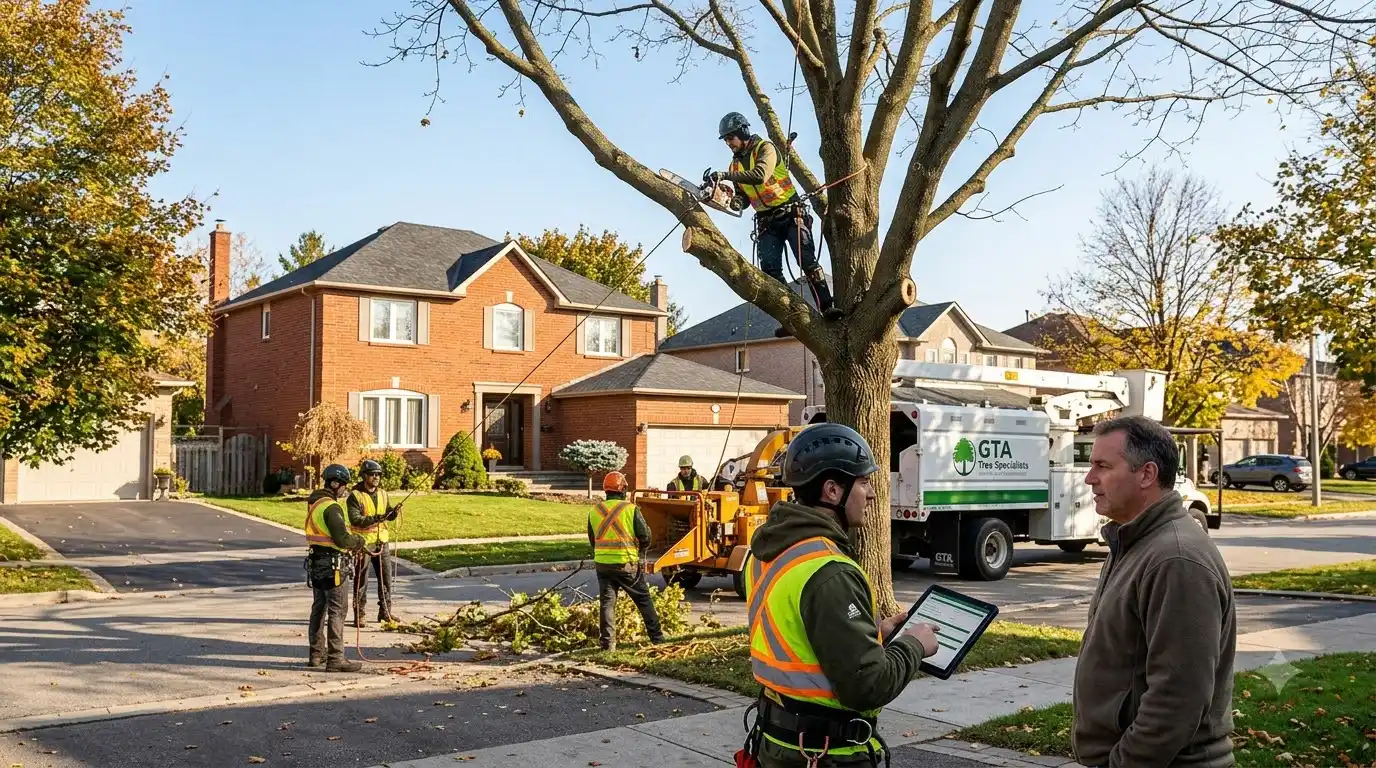
Tree removal cost in Burlington can vary with tree size, access, risk, required approvals and the exact scope of work. Burlington tree removal pricing depends on tree size, access, rigging complexity, debris handling, stump work, permit requirements, and whether Conservation Halton or another approval layer applies. Burlington’s current private-tree framework uses a 20 cm diameter threshold within the Urban Planning Area, not the older 15 cm rule. Because City fees, replacement requirements, and supporting-document needs can change, homeowners should separate the physical tree-work quote from regulatory costs and confirm the current permit requirements directly with the City before authorizing work.
The physical tree-work portion can vary widely. A small ornamental tree with straightforward access may cost far less than a mature tree that requires technical rigging near a home, pool, hydro line, neighbouring property, or constrained backyard. Instead of assuming one fixed all-in figure, compare quotes by scope: removal method, disposal, log handling, stump grinding, cleanup, traffic or access control, and any permit-related professional documentation.
| Property situation | Typical cost drivers | Regulatory check |
|---|---|---|
| Newer subdivision lot | Tree size, fence access, stump work, nearby structures | Confirm whether a private tree is 20 cm or greater and within the Urban Planning Area |
| Established suburban lot | Larger canopy, rigging, debris volume, driveway or pool constraints | City permit may apply; verify current application and replacement requirements |
| Older or lakeside property | Mature trees, confined access, boundary issues, heritage or natural-feature context | City review plus possible Conservation Halton or other site-specific requirements |
| Creek, valley or shoreline-adjacent property | Natural-hazard constraints, equipment access, slope and site protection | Check Conservation Halton regulated-area requirements before related site alteration or development work |
The Burlington Bylaw Cost Factor
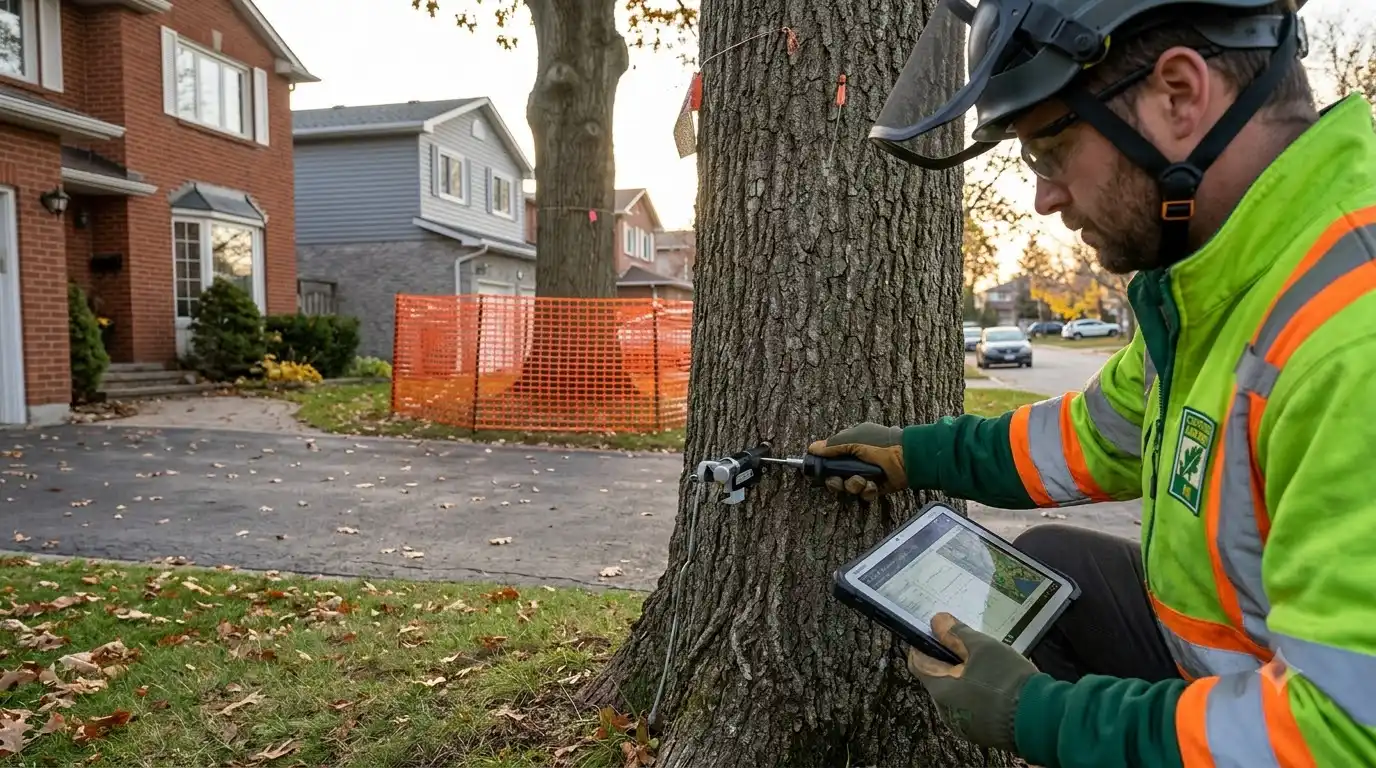
Burlington’s current Forest Protection and Tree Permit guidance says a permit is required to injure or remove a private tree 20 cm in diameter or greater, measured at 1.37 metres, within the Urban Planning Area Boundary. Heritage trees and endangered, threatened, or at-risk species can have additional protection. Dead, terminal-condition, and high-risk trees still follow the City’s permit process, although the City states that fees and compensation may be waived when the qualifying condition is verified.
For budgeting, do not hard-code an old permit fee or assume an arborist report is mandatory in exactly the same form for every application. Check the City’s current fee table and application requirements for the specific permit type. A qualified arborist can help document condition, measurements, ownership or boundary issues when professional documentation is required.
Aldershot: Burlington’s Specialist Tree Territory
The Aldershot neighbourhood in northwest Burlington is where some of the most complex and highest-cost residential tree removal in the city occurs. Aldershot’s topography, at the foot of the Niagara Escarpment, combined with its history as an older estate and residential area, has produced a tree population unlike any other Burlington neighbourhood. Very large eastern hemlocks and white pines on private lots, some reaching 18 to 22 metres with substantial trunk diameters, are found in Aldershot in densities that are uncommon elsewhere in Burlington. These conifers require specialist equipment and techniques different from standard deciduous tree removal work.
Some Aldershot properties also have portions within the Niagara Escarpment Plan Area. Where NEC development control provisions apply, an Escarpment Commission permit may be required before tree removal. A qualified provider may identify NEC applicability during every Aldershot site assessment and advise on the additional application requirements and timelines before pricing is finalized.
Conservation Halton in Burlington
Bronte Creek runs north to south through western Burlington, and the Lake Ontario shoreline creates a regulated area along the city’s south edge. Properties near Bronte Creek, including those in the Bronte Village area and backing onto the Bronte Creek corridor, may require Conservation Halton authorization in addition to the City’s tree permit. The Sixteen Mile Creek boundary area in east Burlington near the Oakville border is also subject to CH regulated area consideration. Property owners should confirm CH status for every Burlington job near a watercourse or the shoreline, and manage both the City and CH permit applications concurrently where required.
Burlington Tree Removal Cost by Neighbourhood 2026
Burlington’s neighbourhoods create different physical cost profiles. Aldershot, Roseland, Shoreacres and older south-Burlington streets can include large mature trees, constrained lots and lakeside or ravine-adjacent settings. Brant Hills, Headon Forest, Mountainside and Palmer often combine established canopy with driveways, pools, fences and mature landscaping. Orchard, Alton Village, Millcroft and other newer areas may have younger trees but can still involve tight side-yard access and protected trees once they meet the current bylaw threshold.
Waterfront and creek-adjacent properties deserve an additional regulated-area check. Conservation Halton permits relate to development and other regulated activities in natural-hazard areas; tree removal by itself should not be described as automatically requiring a conservation permit. If the proposed work also involves grading, excavation, shoreline work, retaining walls, access changes or other regulated activity, confirm the requirements directly with Conservation Halton.
For a useful quote comparison, ask each qualified tree contractor to identify the physical work scope separately from municipal fees, professional reports, replacement planting, cash-in-lieu or conservation-authority work that may apply. This avoids turning a changeable regulatory cost into a misleading fixed ‘Burlington surcharge.’
Frequently Asked Questions
How much does tree removal cost in Burlington? Pricing depends on tree size, condition, access, rigging, disposal, stump work and site constraints. Permit-related fees or professional documents, when required, should be confirmed separately using the City’s current fee schedule and application instructions.
What private-tree threshold does Burlington use? Burlington’s current guidance uses 20 cm diameter or greater, measured at 1.37 metres, within the Urban Planning Area Boundary. Other protections can apply to heritage or at-risk trees.
What happens with dead or high-risk trees? The City still uses a permit pathway, but its guidance states that fees and compensation may be waived for verified dead, terminal-condition or high-risk trees. Check the required supporting documents before work begins.
Can Conservation Halton affect a Burlington tree project? Yes, when associated development or site alteration is in a regulated natural-hazard area. Confirm regulated-area status and the proposed activity directly with Conservation Halton rather than assuming every creek-adjacent tree removal needs a separate conservation permit.
Send Your Tree Request
Need help deciding what to do next? Send your tree request with your location, a brief description and clear photos of the tree or affected area.