Richmond Hill Tree Removal Permit: Current Tree Preservation By-law Explained
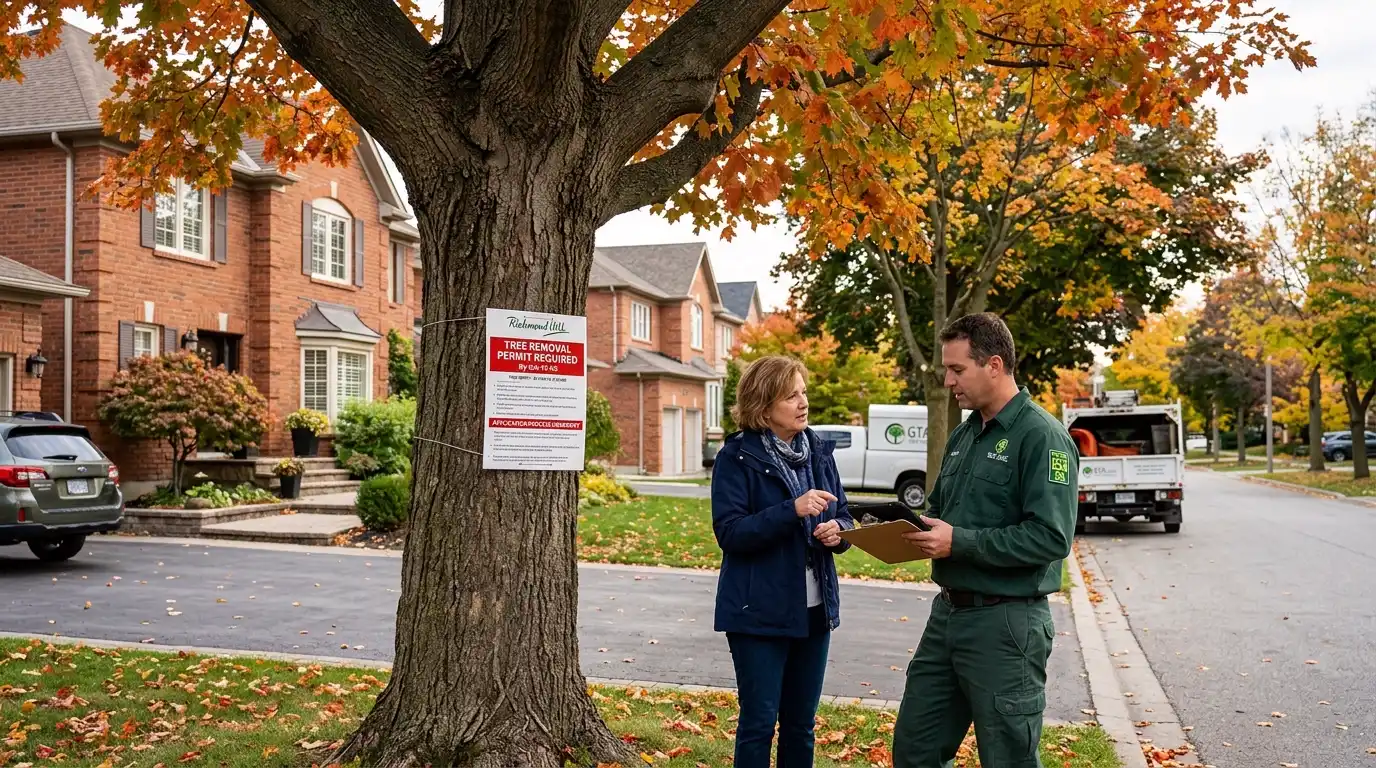
This guide explains the tree removal permit in Richmond Hill, including the approval rules, property conditions and practical steps that can affect the work. Richmond Hill’s current Tree Preservation By-law protects private-property trees based on a 15 cm diameter at breast height threshold, measured at 1.4 metres above ground. That is an important update because older information often refers to By-law 41-07 and a 20 cm threshold. Richmond Hill’s newer By-law 19-25 repealed By-law 41-07, so property owners should use the City’s current tree permit page before removing or injuring a tree.
Richmond Hill Tree Permit – Key Facts
- Current by-law: Tree Preservation By-law 19-25
- Old by-law: By-law 41-07 has been repealed
- Current DBH threshold: 15 cm or more on private property
- DBH measured at: 1.4 metres above ground
- Applies to: Removing or injuring private trees, including trees deemed dead, dying, hazardous, or replacement trees under the current by-law framework
- Tree injury can include: Removing more than 20% of live tissue in 12 months or encroaching into the Tree Protection Zone
- Official resource: Richmond Hill Trees on Private Property
What the Current Richmond Hill Tree Preservation By-law Covers
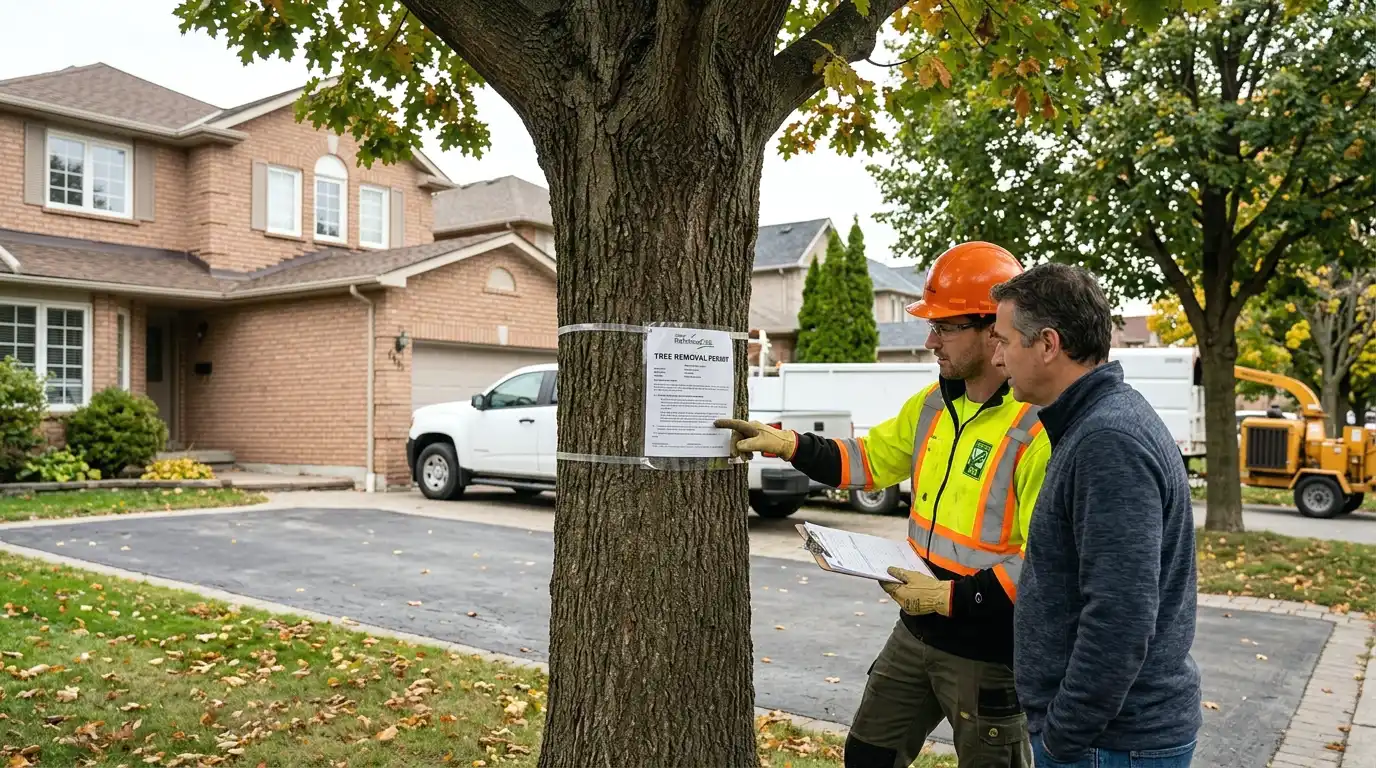
Richmond Hill controls the removal and injury of trees on private property through its current Tree Preservation By-law. The City states that a permit is required before removing or injuring any tree with a diameter at breast height of 15 cm or more. DBH is measured at 1.4 metres above the ground.
The by-law is not only about cutting down a tree. Richmond Hill’s public guidance says injury includes harming, damaging, impairing, or failing to protect a tree according to proper arboricultural practices and City standards. The City also states that removing more than 20% of a tree’s live tissue within a 12-month period, or encroaching into the Tree Protection Zone, is considered an injury to a tree.
That matters for homeowners planning removal, heavy pruning, excavation, driveway work, trenching, grading, pool work, landscaping, retaining walls, decks, additions, or any project near a mature tree. If the tree is at or above the 15 cm threshold, check the permit rules before work starts.
Richmond Hill neighbourhoods such as Bayview Hill, Mill Pond, Oak Ridges, Jefferson, Langstaff, Crosby, North Richvale, Doncrest, Harding, Westbrook, Devonsleigh, Rouge Woods, Elgin Mills, and South Richvale all contain established residential canopy where these rules can come up quickly.
Why Older By-law 41-07 Information Is Risky
Many older Richmond Hill tree permit articles, contractor pages, and saved homeowner notes still mention By-law 41-07 and a 20 cm DBH threshold. That information is outdated. The current public Richmond Hill page refers to a 15 cm DBH threshold, and By-law 19-25 states that By-law 41-07 was repealed.
For practical purposes, this means a tree that might not have required a permit under older 20 cm language may now fall under the current 15 cm rule. A smaller ornamental tree, young maple, backyard cedar, or front-yard tree that looks minor at first glance may still need review if it meets the current threshold.
The safe approach is simple: measure the tree, check the current Richmond Hill page, and confirm with the City or a qualified arborist before removal or injury.
How to Apply for a Tree Removal Permit in Richmond Hill
Step 1: Confirm the tree size and location
Measure the tree diameter at 1.4 metres above ground. If the trunk is 15 cm or more, treat it as potentially regulated under the current Richmond Hill rules. Also confirm whether the tree is private, City-owned, a replacement tree, part of a development site, part of a woodlot, near a natural heritage feature, or affected by York Region rules.
Step 2: Review what documentation is needed
A permit application may require tree details, the purpose of removal or injury, applicable fees, and an arborist report or other documentation depending on the situation. Dead, dying, hazardous, emergency, replacement, construction-related, and development-related trees can have different documentation paths.
Step 3: Submit through Richmond Hill’s process
Richmond Hill provides an online application process for permits related to the injury or destruction of trees. The applicant should keep copies of the application, payment confirmation, uploaded documents, correspondence, and any permit or reference number.
Step 4: City review and inspection
The City may review the application, request more information, inspect the property, consider the tree’s species, condition, location, size, ecological value, erosion or flood-control context, surrounding-property impacts, and cultural heritage value, then approve, refuse, or issue conditions.
Step 5: Follow permit conditions before work begins
If a permit is issued, read the conditions before scheduling work. Conditions may involve replacement planting, cash-in-lieu, restoration, supervision by an arborist, timing restrictions, posting the permit on site, or other requirements.
Richmond Hill vs Toronto: Key Differences
Richmond Hill and Toronto both regulate private tree injury and removal, but they do not use the same threshold. Toronto’s private-tree threshold is commonly associated with 30 cm DBH. Richmond Hill’s current public guidance says private trees with DBH of 15 cm or more require a permit before removal or injury.
This means Richmond Hill captures many more residential trees than Toronto’s private-tree by-law threshold. If you own property in Richmond Hill, do not assume Toronto rules apply. Use Richmond Hill’s current page and by-law before making a decision.
Also remember that City-owned trees, replacement trees, woodlots, natural heritage areas, development sites, and York Region forest rules may create separate requirements beyond the private-tree threshold.
Need Help Understanding a Richmond Hill Tree Permit Request?
Special Situations Under Richmond Hill’s Current Rules
Dead, dying, or hazardous trees
The current Richmond Hill by-law includes specific treatment for trees deemed dead, dying, or hazardous. Older guidance may say dead or hazardous trees are exempt from a regular permit where proper arborist documentation is submitted, while the current By-law 19-25 uses an exemption-permit framework. The key point for property owners is this: do not remove a dead, dying, or hazardous regulated tree without confirming the current process with Richmond Hill first.
A qualified arborist may document the visible condition.
Emergency work
If a tree creates an immediate safety concern, contact Richmond Hill directly and speak with a qualified arborist or qualified tree care professional. Emergency work can have its own documentation requirements, including post-work documentation in some circumstances. Do not assume urgency removes every paperwork responsibility.
Trees near the property line
Trees near property lines can raise ownership, access, neighbour, root, branch, and consent questions. If a trunk, roots, or canopy crosses a boundary, clarify the issue before removal or injury. A qualified arborist may discuss visible tree condition, location, and next steps.
Construction projects
If you are planning a renovation, addition, pool, driveway, grading, trenching, retaining wall, or landscaping project near a regulated tree in Richmond Hill, tree requirements should be checked early. The current by-law treats encroachment into the Tree Protection Zone as injury, which means construction activity near trees can trigger concerns even if removal is not planned.
Replacement Planting and Cash-in-Lieu
Richmond Hill’s current page lists tree replacement requirements based on DBH and notes that cash-in-lieu may apply in some circumstances. The number of replacement trees can increase as the size of the removed tree increases. The City also notes that security deposits may be collected for replacement trees under the current fee by-law.
Read the permit conditions carefully. Replacement planting, cash-in-lieu, restoration plans, maintenance requirements, deadlines, and inspections are not details to leave until later. Confirm who is responsible for sourcing, planting, watering, maintaining, and documenting any replacement trees.
Tips for Richmond Hill Property Owners
If you have mature trees on your Richmond Hill property and you are planning removal, pruning, construction, or heavy landscaping, check tree rules before hiring anyone. A short delay at the planning stage is better than discovering after work begins that a permit, arborist report, replacement condition, or City review was required.
Ask these questions before approving work:
- Is the tree 15 cm DBH or more?
- Is the tree private, City-owned, a replacement tree, or part of a woodlot?
- Will the work remove more than 20% of live tissue or enter the Tree Protection Zone?
- Is the tree dead, dying, hazardous, or emergency-related?
- Is the property affected by York Region, development, site alteration, or natural heritage rules?
- Who is responsible for reports, permit-related documents, pricing, scheduling, insurance, WSIB, cleanup, and communication?
York Region and Richmond Hill: Overlapping Rules
Richmond Hill is part of York Region, and regional forest rules may apply in some locations. The current Richmond Hill by-law still needs to be considered for private trees, while York Region’s forest conservation framework may be relevant for larger treed areas, forests, woodlots, natural heritage features, or rural-residential properties.
For most developed residential lots in Richmond Hill, the local Tree Preservation By-law will be the first rule to check. If the property is near Oak Ridges Moraine lands, a creek valley, woodland, or natural heritage feature, check York Region and conservation authority context as well.
You can start with Richmond Hill’s Trees on Private Property page and York Region’s tree cutting permit page.
Frequently Asked Questions
Do you need a permit to remove a tree in Richmond Hill?
Yes, in many cases. Richmond Hill’s current Tree Preservation By-law requires a permit before removing or injuring a private tree with a DBH of 15 cm or more, measured at 1.4 metres above ground. Confirm current requirements before work begins.
Is By-law 41-07 still the current Richmond Hill tree by-law?
No. Richmond Hill’s current Tree Preservation By-law is By-law 19-25, which repealed By-law 41-07. Older 20 cm threshold references should be updated to the current 15 cm DBH threshold shown on Richmond Hill’s official page.
What counts as injury to a tree in Richmond Hill?
Richmond Hill states that injury includes harming, damaging, impairing, or failing to protect a tree according to proper arboricultural practices and City standards. Removing more than 20% of live tissue within 12 months or encroaching into the Tree Protection Zone is considered injury.
How do I apply for a tree removal permit in Richmond Hill?
Use Richmond Hill’s current online permit process. Requirements may include the application, fees, tree details, site information, and an arborist report or other documentation where required.
Do dead, hazardous or diseased trees still need documentation in Richmond Hill?
Yes. Richmond Hill says an Arborist Certificate must be submitted before altering a dead, hazardous or diseased tree, or as follow-up documentation after emergency work. Confirm the current certificate and permit requirements before work begins.
What happens if a tree is removed without proper permission?
Unauthorized tree injury or removal can lead to enforcement, administrative penalties, fines, replacement requirements, compliance orders, and other consequences. The property owner should confirm permit status before any contractor begins work.
Related Guides and Services
- Toronto Permit Guide
- Markham Permit Guide
- Vaughan Permit Guide
- Consequences of No Permit
- Arborist Report Requests
- Richmond Hill Tree Requests
Richmond Hill Areas Covered by This Guide
Other Permit Guides:
Toronto |
Mississauga |
Vaughan |
Markham |
Brampton